
Choosing between a facelift and fillers isn't just a cosmetic decision — it's a deeply personal one that depends on what's actually happening with your face, your goals, and how much change you're looking for. Both options can genuinely transform the way you look and feel, but they work in completely different ways and deliver very different results. Fillers replace lost volume and smooth lines, offering subtle refreshment with little to no downtime. A facelift, on the other hand, addresses the underlying structural changes that come with ageing — repositioning tissue, removing excess skin, and creating results that last years rather than months. Understanding the difference matters because choosing the wrong approach can leave you disappointed, or worse, chasing treatments that were never going to give you what you wanted. This guide breaks it all down clearly, so you can walk into any consultation feeling informed and confident.
What Is Facelift vs Fillers?
When people start noticing changes in their face — sagging skin, deeper lines, lost volume — two options tend to come up most often: a facelift or fillers. Both address signs of aging, but they work in completely different ways and deliver very different results.
A facelift is a surgical procedure. A plastic surgeon physically lifts and repositions the underlying facial tissues, removes excess skin, and tightens everything for a more youthful appearance. It's a significant commitment — there's downtime, recovery, and all the considerations that come with going under anesthesia. But the results are lasting, often a decade or more.
Fillers are a non-surgical alternative. A practitioner injects a gel-like substance — most commonly hyaluronic acid — beneath the skin to restore lost volume, smooth out lines, and subtly reshape facial contours. The whole appointment might take 30 minutes. You walk in, you walk out, and most people return to normal life the same day.
So why does the comparison matter? Because they're often confused as doing the same job. They don't. Fillers replace volume. A facelift addresses laxity — the loose, drooping skin that fillers simply can't lift. At the same time, a facelift won't replace the volume that naturally disappears with age. Many people eventually benefit from both, used together thoughtfully.
Understanding the distinction helps you ask better questions during consultations and makes it easier to match the right treatment to what you're actually seeing in the mirror.
Key Benefits of Facelift vs Fillers
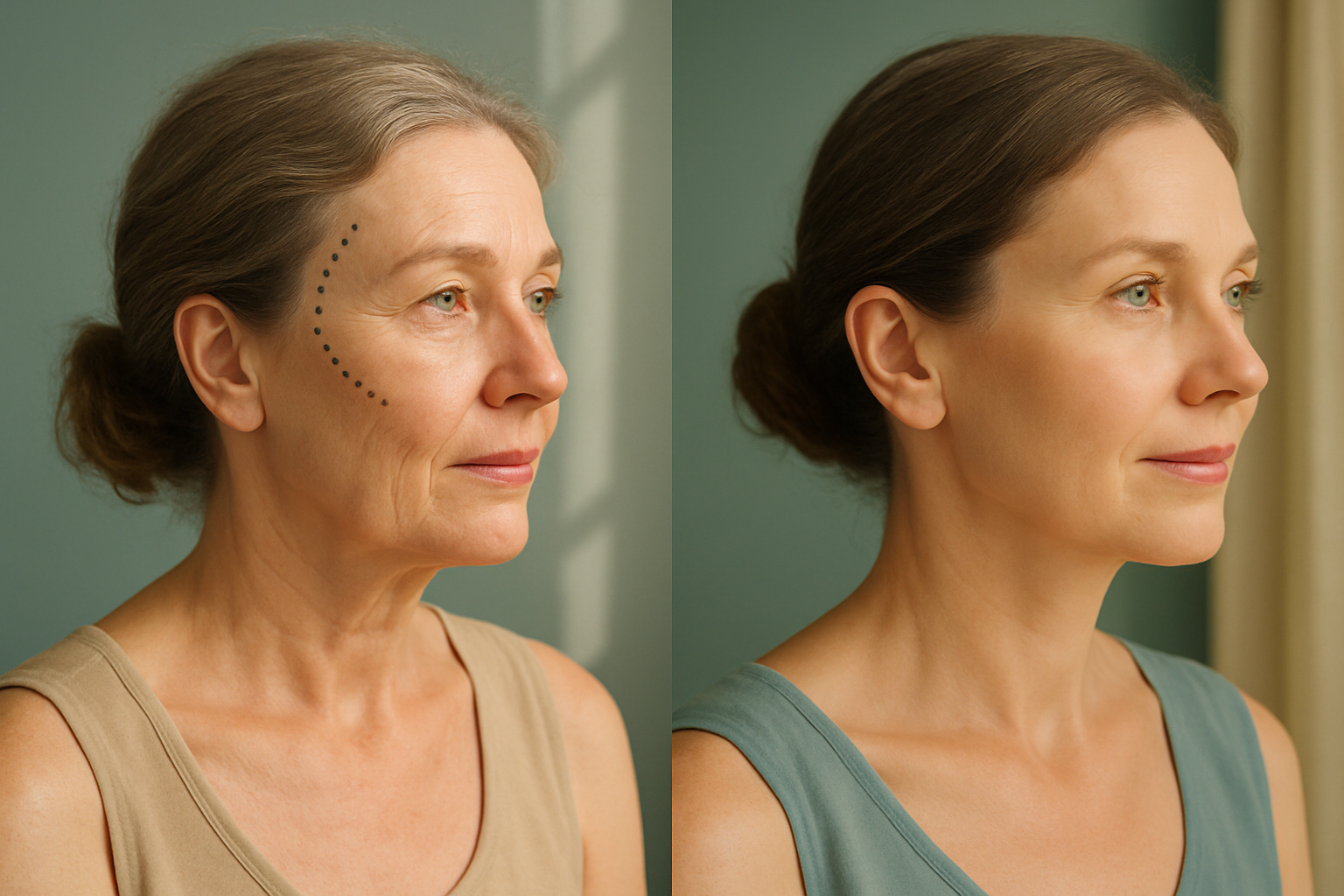
Choosing between a facelift and fillers isn't always straightforward, but understanding what each one actually delivers makes the decision much clearer.
Fillers are the go-to option when you want quick, visible results without any downtime. A session takes less than an hour, and you walk out looking refreshed. They're ideal for restoring lost volume in the cheeks, softening lines around the mouth, and adding subtle definition. Results appear immediately, adjustments are possible, and if you change your mind, many fillers can be dissolved. For someone in their 30s or early 40s noticing the first signs of ageing, fillers offer a flexible, low-commitment way to stay ahead of the curve.
A facelift, on the other hand, addresses something fillers simply can't — structural change. When skin has lost significant elasticity, when jowls have developed, or when the neck has started to sag, adding volume alone won't fix the underlying issue. A facelift physically repositions tissues and removes excess skin, creating a result that looks natural rather than filled. The outcome is more comprehensive and far longer lasting, typically a decade or more.
Here's where the real comparison gets interesting. Repeated filler treatments over many years add up financially and can, in some cases, alter facial proportions in ways that are hard to reverse. A facelift is a single investment with enduring results.
That said, the two aren't mutually exclusive. Many surgeons use fillers alongside a facelift to fine-tune volume and finish the result beautifully.
The honest answer is that neither option is universally better. It comes down to your age, anatomy, goals, and how much change you're actually looking for. A good consultation will tell you far more than any general comparison can.
How Facelift vs Fillers Works

These two treatments take completely different paths to get to a similar destination — a fresher, younger-looking you. Understanding the mechanics behind each one makes it much easier to choose the right option.
How a Facelift Works
A facelift is a surgical procedure performed under anaesthesia. Your surgeon makes discreet incisions, typically around the hairline and ears. Through those incisions, they lift and reposition the underlying facial muscles and connective tissue — a layer called the SMAS (superficial musculoaponeurotic system). Excess skin is trimmed away, and the remaining skin is re-draped smoothly over the newly repositioned foundation. The result is structural. It physically corrects sagging, restores definition along the jawline, and tightens loose skin in the neck and cheeks. Recovery takes a few weeks, but the results are long-lasting — often a decade or more.
How Fillers Work
Fillers are non-surgical and take around 30 minutes to administer. A practitioner uses a fine needle or cannula to inject a gel-like substance — most commonly hyaluronic acid — into specific areas of the face. That substance adds volume where it's been lost, softens deep lines, and restores contour to areas like the cheeks, lips, and jawline. The filler essentially fills the space beneath the skin, pushing it outward and upward. Results are immediate. There's minimal downtime, though some swelling and bruising can occur. Most fillers last between 12 and 24 months before the body gradually absorbs them.
The Core Difference
A facelift repositions and removes. Fillers restore and add. One works from the inside out through surgery; the other works by introducing volume beneath the skin's surface. Neither is universally better — the right choice depends entirely on what your face needs and what kind of commitment you're comfortable with.
Common Questions About Facelift vs Fillers
Which lasts longer, a facelift or fillers? A facelift typically lasts 7–10 years, sometimes longer. Fillers, depending on the type, usually last 6–18 months before your body gradually absorbs them. If you want results you can largely forget about, surgery has the clear edge.
Am I too young for a facelift? Most surgeons recommend facelifts for patients in their 40s, 50s, and beyond, when skin has lost significant elasticity. Younger patients often get better value from fillers, which can subtly restore volume without the commitment of surgery.
Can I use fillers to avoid surgery altogether? For a while, yes. Many people use fillers successfully through their 40s and even early 50s to stay ahead of aging. But fillers add volume — they don't lift or tighten loose skin. There's a point where surgery becomes the more appropriate tool.
Do fillers look more natural than a facelift? Both can look completely natural in skilled hands. The reputation for "overdone" results usually comes from too much product or poor technique, not the treatment itself.
What's the recovery difference? Fillers require almost no downtime — most people return to normal activities the same day. A facelift involves 2–3 weeks of meaningful recovery, with some swelling and bruising lasting longer.
Is one safer than the other? Fillers carry fewer surgical risks, but complications can still occur. Facelifts involve anesthesia and longer recovery. Neither is without risk, which is why choosing a qualified, experienced provider matters so much.
Conclusion
Choosing between a facelift and fillers doesn't have to feel overwhelming. Both options can deliver genuinely beautiful results — it really comes down to what you want to achieve, how much downtime you can manage, and where you are in your skin's natural ageing journey.
Here's the short version: fillers work wonderfully for early signs of ageing, adding subtle volume and refreshing your appearance with minimal fuss. A facelift becomes the stronger choice when skin laxity and deeper structural changes are the main concern — something fillers simply can't fully address.
A few things worth remembering:
- Neither option is universally "better"
- Results and recovery vary from person to person
- An honest consultation makes all the difference
The best next step? Book a face-to-face consultation with a qualified practitioner. Bring your questions, be open about your goals, and let the conversation guide you toward the right decision for *your* face.